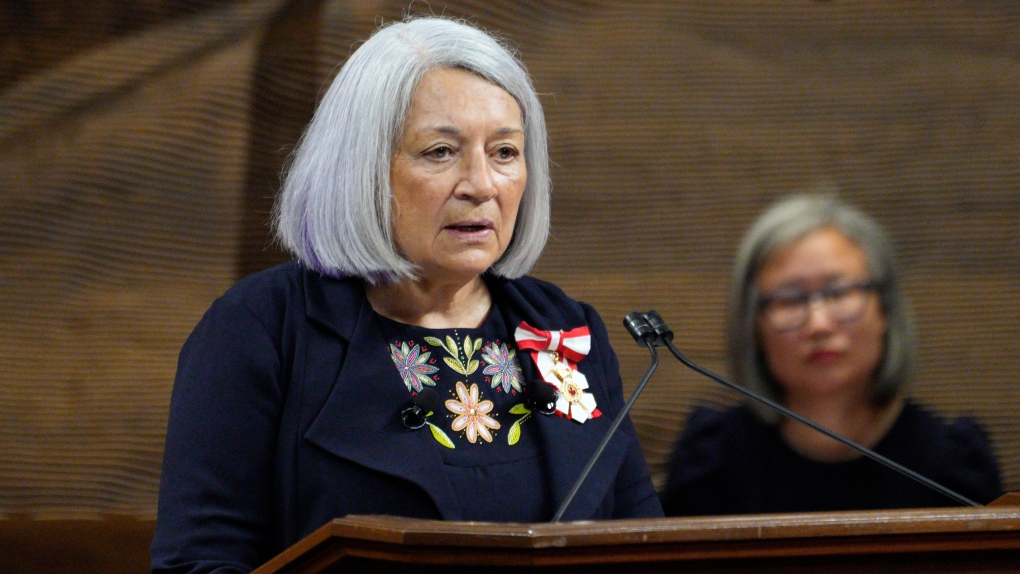
meatthesavages.com – Mary Simon made history on July 26, 2021, when she was appointed as the 30th Governor General of Canada and the first Indigenous person to hold this prestigious office. Her appointment represents a significant milestone in Canadian history, reflecting the country’s ongoing efforts toward reconciliation and inclusivity. As a distinguished Inuit leader, diplomat, and advocate for Indigenous rights, Simon brings a wealth of experience to her role and has used her platform to amplify the voices of Indigenous communities while promoting unity and social justice in Canada.
Her appointment as Governor General also symbolizes a break from traditional norms and reinforces the importance of representation for marginalized communities in the highest levels of Canadian leadership. Since taking office, Simon has emphasized themes of reconciliation, inclusion, and the importance of fostering a sense of belonging for all Canadians.
Early Life and Background
Mary Simon was born on August 21, 1947, in Kangiqsualujjuaq (formerly known as George River), a remote Inuit community in northern Quebec. She grew up in the harsh but beautiful landscape of the Canadian Arctic, an experience that shaped her identity and deepened her connection to her Inuit heritage. Raised in a traditional Inuit family, Simon’s early life was marked by the challenges of living in a northern community, where access to services was often limited.
Her upbringing, combined with her strong sense of Inuit culture and identity, became a defining aspect of her career. Simon’s early exposure to the struggles faced by Indigenous peoples in Canada laid the foundation for her later advocacy work and leadership within the Inuit community.
Simon attended the University of Toronto, where she studied history and sociology. She went on to become a prominent advocate for Indigenous rights and issues, focusing on the preservation of Inuit culture and language, as well as addressing the systemic challenges faced by Indigenous communities across Canada.
Career and Leadership in Indigenous Rights
Before becoming Governor General, Mary Simon had a distinguished career in public service, diplomacy, and Indigenous leadership. She was the first Inuk to serve as Canada’s ambassador for circumpolar affairs and played a key role in international Indigenous and Arctic policy.
Simon’s career is marked by her longstanding commitment to improving the lives of Indigenous peoples and ensuring their voices were heard on the world stage. As an advocate for Indigenous rights, she worked on issues such as land claims, self-determination, and the preservation of cultural heritage.
One of her significant accomplishments was her work on the Inuit Tapiriit Kanatami (ITK), the national voice for over 65,000 Inuit across Canada. She served as the organization’s president, helping to raise awareness about the social and political issues affecting Inuit communities, particularly in the Arctic regions. During her tenure, she was instrumental in advocating for improved health care, education, and housing in Inuit communities, as well as addressing the challenges posed by climate change.
Simon also served as the chair of the board of directors of the Inuit Tapiriit Kanatami and played a pivotal role in the negotiation of land claims and resource-sharing agreements. Her leadership in these areas helped pave the way for more equitable policies and greater representation for Indigenous communities in Canada.
Appointment as Governor General
On July 26, 2021, Mary Simon was appointed as Canada’s 30th Governor General by Queen Elizabeth II. Her appointment was a historic moment, as she became the first Indigenous person to hold this position. Prime Minister Justin Trudeau praised Simon’s appointment as a symbol of progress toward reconciliation, noting that her leadership would help bring a new perspective to the role of the Governor General and promote inclusivity in the country’s institutions.
Simon’s appointment was widely regarded as a significant step toward addressing the historical exclusion of Indigenous peoples from positions of power and influence in Canada. It was seen as a recognition of the contributions and potential of Indigenous peoples and a tangible acknowledgment of the country’s commitment to building a more just and inclusive society.
As Governor General, Simon’s role is to serve as the ceremonial representative of the Queen in Canada, performing duties such as opening sessions of Parliament, giving royal assent to bills, and presiding over various official events. However, as Governor General, Simon has also used her platform to champion reconciliation, Indigenous rights, and the broader issues facing Canada’s Indigenous populations.
Promoting Reconciliation and Indigenous Rights
Since assuming office, Mary Simon has been a vocal advocate for the rights and well-being of Indigenous peoples in Canada. One of her primary goals has been to promote reconciliation between Indigenous and non-Indigenous Canadians and to highlight the importance of acknowledging the past injustices faced by Indigenous communities.
In her speeches and public engagements, Simon has consistently emphasized the need for all Canadians to come to terms with the history of colonialism and its lasting impacts on Indigenous communities. She has called for greater support for initiatives aimed at healing and reconciliation, including the implementation of the Truth and Reconciliation Commission’s calls to action, the recognition of Indigenous languages, and addressing the legacy of residential schools.
Simon has also spoken about the importance of creating a future in which Indigenous communities are empowered to make decisions about their own lives, cultures, and lands. She advocates for self-determination and for policies that respect the rights of Indigenous peoples, including the right to preserve and protect their traditional knowledge and way of life.
Throughout her time as Governor General, Simon has actively engaged with Indigenous communities across Canada. She has participated in cultural ceremonies, visited remote northern regions, and met with Indigenous leaders to hear their concerns and learn about their experiences. By using her role to engage with these communities, Simon has worked to foster a deeper understanding of the unique challenges faced by Indigenous peoples and the importance of reconciliation in moving Canada forward.
Championing Inclusion and National Unity
While Simon’s appointment is particularly significant in the context of her Indigenous heritage, her vision for Canada as Governor General extends beyond the issues of Indigenous rights. She has also been a strong proponent of inclusivity for all marginalized communities, encouraging Canadians to embrace diversity and work together to create a more united and equitable country.
Simon has been an advocate for the rights of women, immigrants, and racialized communities, calling for a Canada that values every individual’s contributions regardless of their background. She has underscored the need for all Canadians to foster a culture of respect, understanding, and empathy, both within their communities and across the country.
In her role as Governor General, Simon has also worked to bring attention to issues related to climate change and environmental sustainability. Given her Arctic roots and connection to the land, Simon has been outspoken about the need to protect Canada’s environment, particularly in the face of global challenges such as climate change that disproportionately impact Indigenous communities in the North.
Legacy and Impact
Mary Simon’s legacy as Governor General will be remembered as a time of historic firsts, but also as a period of continued work toward reconciliation and greater representation for Indigenous peoples in Canada. Her leadership has opened doors for future generations of Indigenous leaders and highlighted the importance of amplifying Indigenous voices in Canadian society.
As the first Indigenous person to serve as Governor General, Simon’s appointment has been a powerful symbol of Canada’s commitment to acknowledging and addressing its past wrongs. Her efforts to promote reconciliation, cultural preservation, and social justice are a testament to her dedication to making Canada a more inclusive and equitable country.
While her term is ongoing, it is clear that Simon’s impact will be felt for years to come, not only in her role as Governor General but in her lifelong advocacy for Indigenous rights and her work to build bridges between all Canadians.
Conclusion
Mary Simon’s appointment as Governor General of Canada is a groundbreaking moment in the nation’s history, symbolizing progress in the ongoing journey toward reconciliation with Indigenous peoples. Her leadership, grounded in her experience as a renowned Inuit advocate, has brought renewed focus to issues of inclusion, social justice, and environmental sustainability.
By championing the rights of Indigenous peoples and promoting a vision of Canada as a united, diverse, and inclusive nation, Simon is helping to redefine the role of Governor General and set a powerful example for future generations. Her legacy will be defined by her unwavering commitment to reconciliation, her dedication to advancing Indigenous rights, and her work toward building a stronger, more just Canada for all.